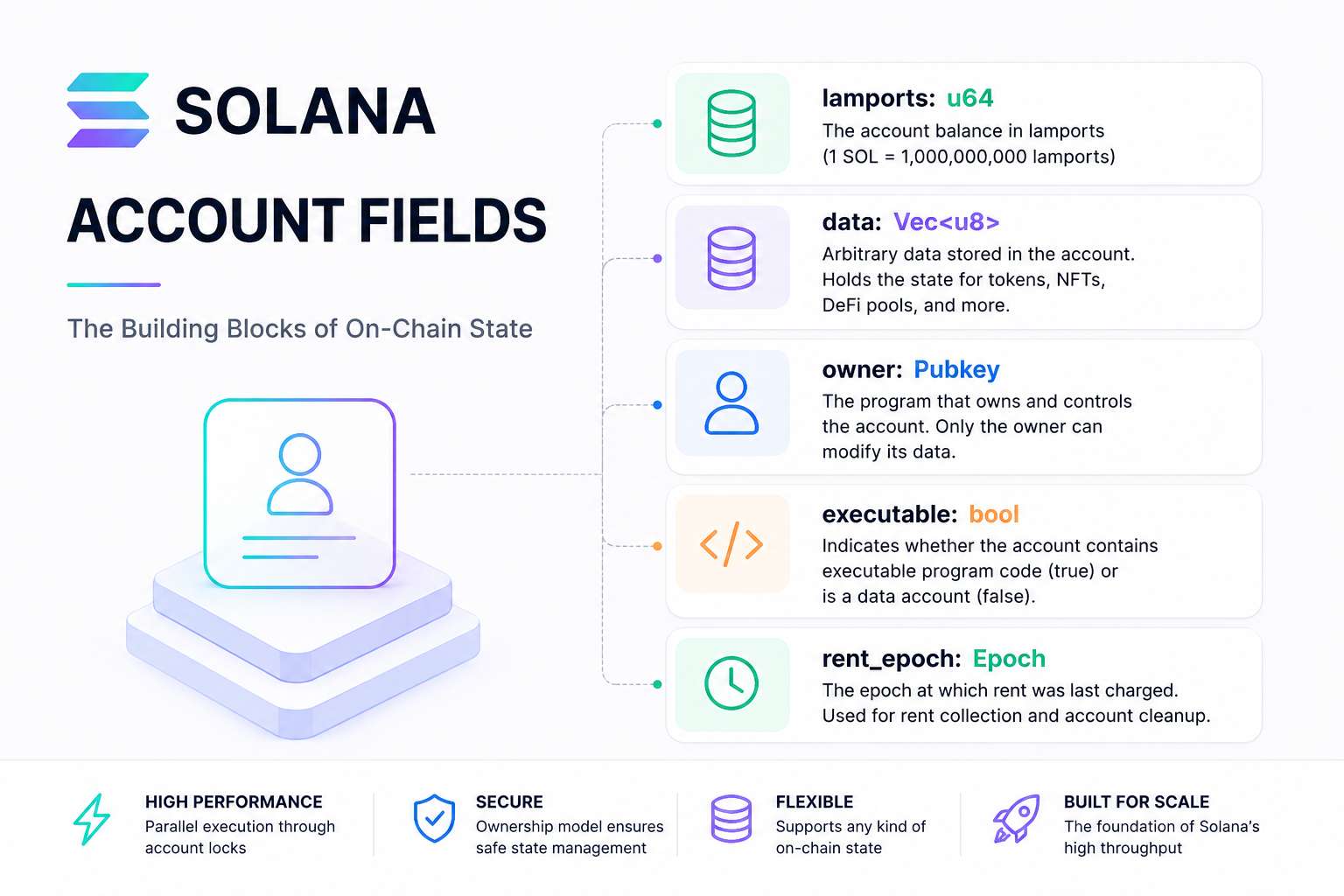
What is a Solana PDA?
In Solana development, PDA stands for Program Derived Address.
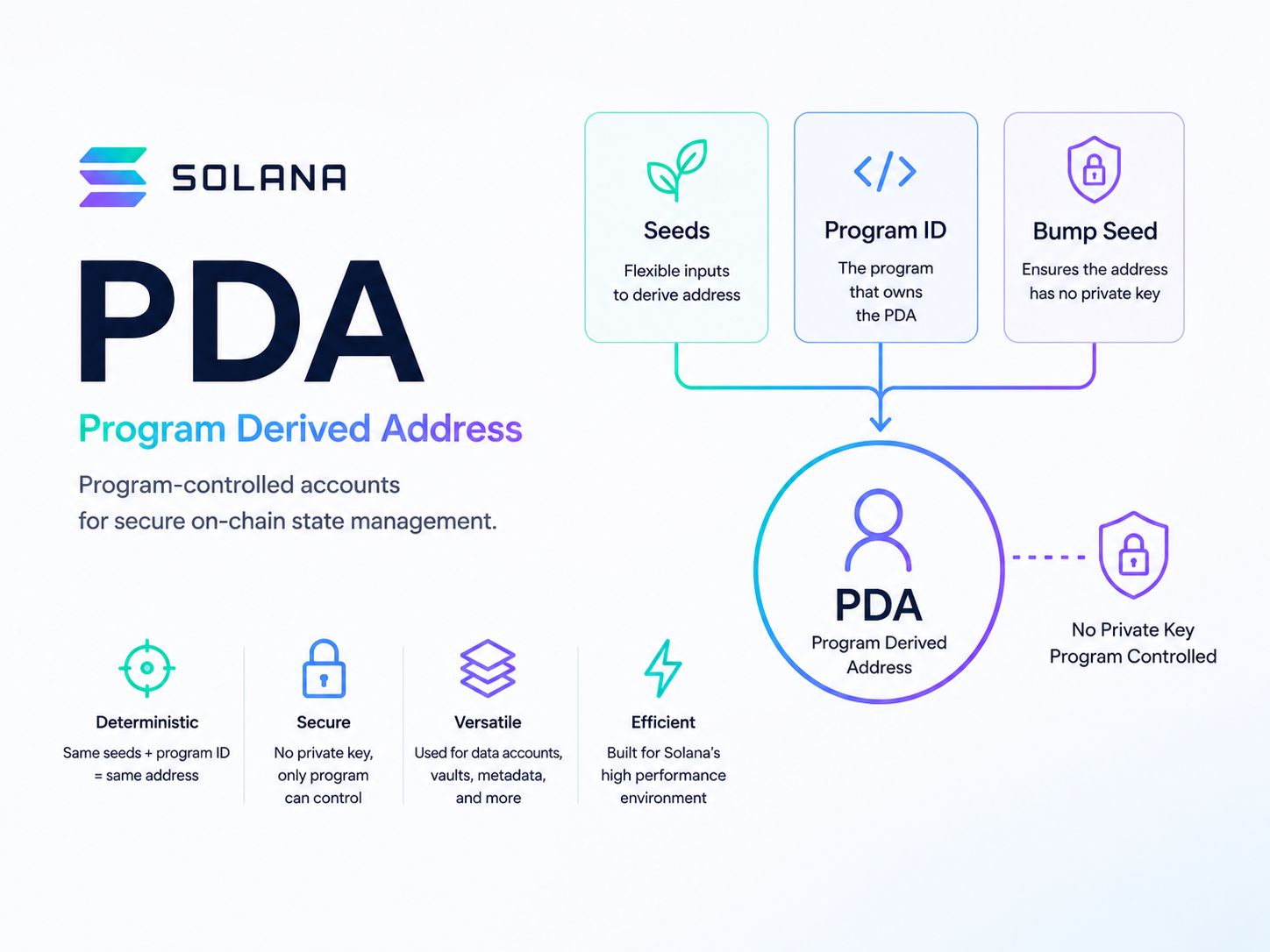
A PDA is a special type of account address generated by a Solana Program using deterministic rules. Unlike normal wallet addresses, a PDA does not have a private key and cannot be directly controlled by users.
PDA is one of the most important mechanisms in Solana because it enables Programs to manage on-chain state and assets securely.
Why Does Solana Need PDA?
On Solana, Programs are stateless and read-only.
This means:
- Programs execute logic
- Accounts store data
A Program cannot directly store user data internally like a traditional backend service.
Applications such as:
- DeFi protocols
- NFT marketplaces
- Staking systems
- Blockchain games
all need accounts to store:
- User balances
- Positions
- Metadata
- Vault assets
Regular wallet accounts are controlled by private keys, which creates security and ownership issues for protocols.
Therefore, Solana introduced PDA accounts:
- No private key
- Controlled only by Programs
- Deterministically generated
How PDA Works
A PDA is derived from:
- Seeds
- Program ID
- Bump Seed
Example:
const [pda, bump] = PublicKey.findProgramAddressSync(
  [
    Buffer.from("user"),
    wallet.publicKey.toBuffer(),
  ],
  programId
);
Here:
-
"user"is a seed -
wallet.publicKeyis the user address -
programIdidentifies the Program
The result is a deterministic PDA address.
As long as:
- Seeds remain the same
- Program ID remains the same
the PDA will always be identical.
What is a Bump Seed?
Solana addresses are elliptic curve public keys.
However, PDAs must not have valid private keys.
Therefore, Solana continuously tries bump values:
255 → 254 → 253 ...
until it finds an address that:
- Cannot generate a private key
- Can only be controlled by the Program
This value is called the bump seed.
Why PDAs Have No Private Keys
Normal wallet addresses are generated like this:
Private Key → Public Key → Address
But PDA generation works differently:
Seeds + ProgramID → Hash → PDA
As a result:
- PDAs have no private keys
- Users cannot control them
- Hackers cannot recover a secret key
Only the associated Program can manage them.
How Programs Control PDAs
Although PDAs cannot sign transactions directly, the Solana runtime allows Programs to prove ownership using:
- Seeds
- Bump
- Program ID
This enables Programs to “sign” on behalf of the PDA.
As a result, PDAs can:
- Transfer tokens
- Modify on-chain state
- Perform CPI calls
- Mint tokens
Common PDA Use Cases
DeFi Vaults
Many DeFi protocols use PDA accounts as vaults for:
- Liquidity pools
- Staking assets
- Treasury management
NFT Metadata
NFT protocols often derive metadata accounts using:
metadata + mint address
This creates predictable metadata PDAs.
Projects like Metaplex heavily rely on this design.
User State Management
Protocols often create dedicated PDAs for users:
User PDA
Position PDA
Stake PDA
These accounts store:
- User positions
- Staking data
- Game progress
- Reward points
PDA vs Normal Wallet Addresses
TypeWallet AddressPDAHas Private KeyYesNoCan SignYesNoControlled ByUserProgramPredictableNoYesMain UsePaymentsState Management
PDA in Anchor
In the Anchor framework, PDAs are widely used.
Example:
#[account(
    seeds = [b"user", user.key().as_ref()],
    bump
)]
pub user_account: Account<'info, UserAccount>,
Anchor automatically:
- Derives PDA
- Verifies bump
- Validates accounts
This has become the standard development pattern in Solana.