The Origin of ERC-20
In the early days of Ethereum, developers could create tokens freely, but without a unified standard, each token behaved differently. This fragmentation created compatibility issues for wallets, exchanges, and decentralized applications.
ERC-20 was introduced to solve this problem by defining a common interface that all tokens could follow.
Core Design Principles
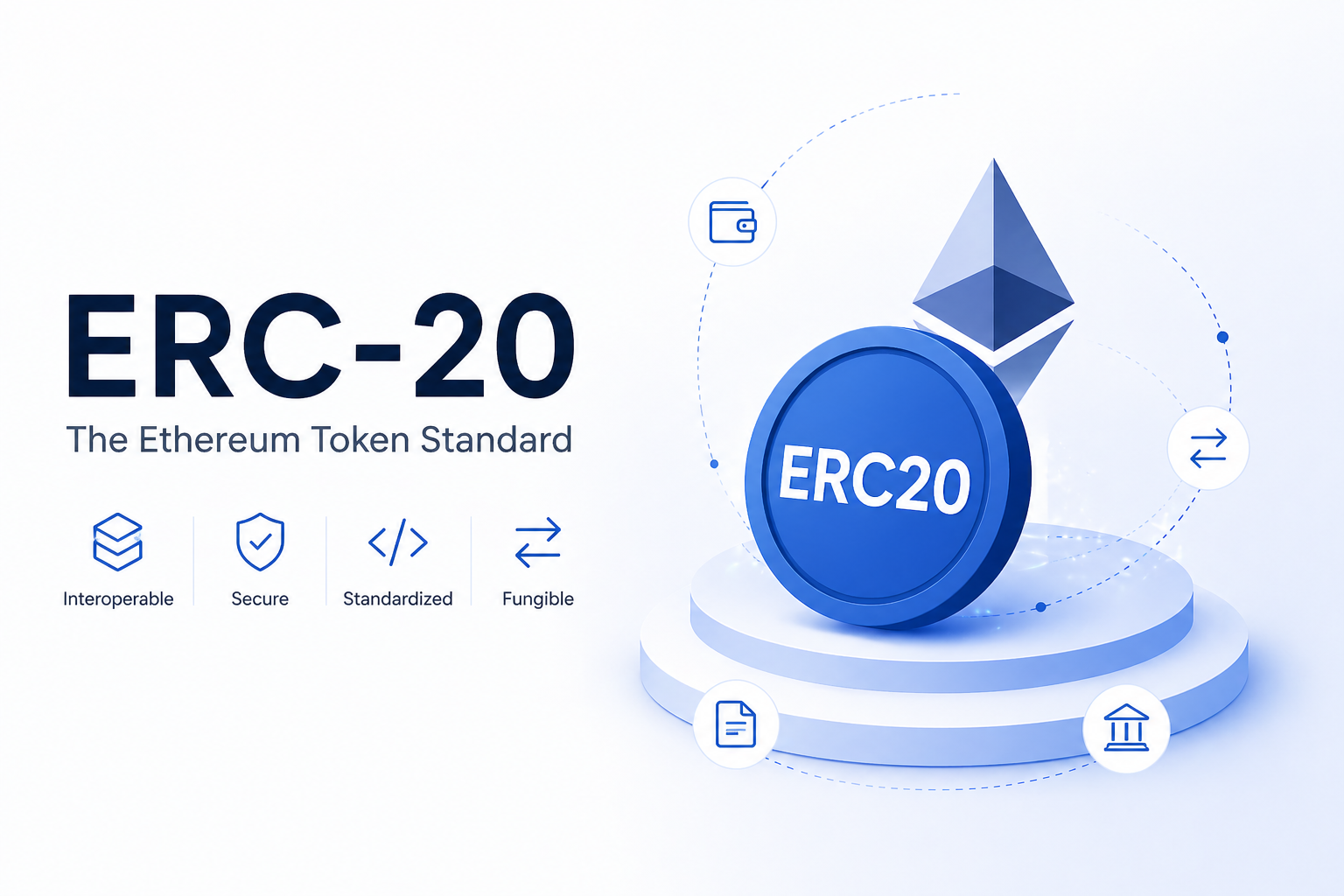
ERC-20 is built on two key principles: fungibility and standardization.
Fungibility ensures that each token unit is interchangeable, while standardization allows all tokens to be universally supported across platforms.
Core Functions and Mechanics
The ERC-20 standard defines essential functions:
- totalSupply() – total supply
- balanceOf(address) – check balance
- transfer(address, amount) – transfer tokens
- approve(spender, amount) – grant allowance
- transferFrom(from, to, amount) – transfer via allowance
- allowance(owner, spender) – check allowance
The approve + transferFrom mechanism enables smart contracts to operate tokens on behalf of users, forming the backbone of DeFi.
Role in the DeFi Ecosystem
ERC-20 has enabled the rapid growth of DeFi by providing a unified token interface. It powers decentralized exchanges, lending platforms, and stablecoins.
This interoperability allows protocols to integrate seamlessly, creating composable financial systems.
Advantages and Limitations
Advantages:
- Strong standardization
- Easy deployment
- Supports complex financial logic
Limitations:
- Security risks in approval mechanism
- No native callback support
- Higher gas costs
Real-World Impact
ERC-20 serves as the backbone of Ethereum’s token economy. Most digital assets in DeFi today are built on this standard.