Introduction
Traditional economics often focuses on the fundamental value of assets while abstracting away from the actual mechanics of trading. In contrast, market microstructure examines how trading occurs and how specific mechanisms influence prices and traded volumes. Over the past two decades, the field has grown rapidly due to globalization, regulatory changes, and technological advancements.
Market Function
The primary purpose of a market is to bring buyers and sellers together. Capital markets are generally divided into primary and secondary markets. The primary market is responsible for issuing new securities, such as IPOs and bond issuance, while the secondary market facilitates the subsequent trading of these assets.
Secondary markets are essential because they provide liquidity, allowing investors to convert assets into cash or reallocate capital efficiently. This flexibility significantly enhances market attractiveness and is a central focus of market microstructure research.
Market Participants
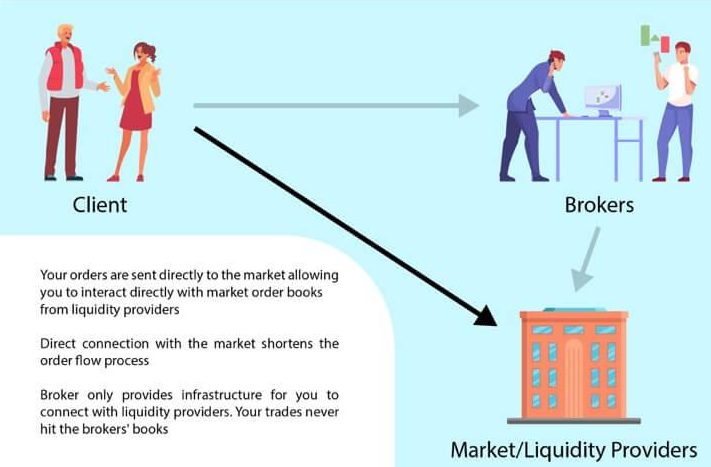
Market participants are typically divided into buy-side and sell-side entities. The buy-side includes institutional and individual investors, while the sell-side consists of brokers, dealers, and other financial intermediaries. Brokers act as agents facilitating trades, whereas dealers trade on their own account and provide liquidity.
In microstructure models, participants are further classified based on information: informed traders possess private information and can better estimate asset value, while liquidity traders trade to meet financial or portfolio needs.
Trading Behavior and Market Dynamics
Traders can also be categorized by trading style. Active traders demand immediate execution and tend to move prices in the direction of their trades. Passive traders, on the other hand, provide liquidity and help stabilize prices.
Over the long run, liquidity traders often lose when trading against informed traders, while passive traders tend to profit from active traders. However, informed traders face the risk of information leakage and often adopt strategies such as anonymous trading to mitigate this risk.
The Role of Liquidity
Liquidity is a fundamental measure of market efficiency and reflects the ability to convert assets into cash quickly. Highly liquid markets typically have lower trading costs and higher trading volumes.
Asset prices are closely linked to liquidity. For example, newly issued government bonds often trade at higher prices than older ones, reflecting a liquidity premium.
Key Dimensions of Liquidity
Market liquidity can be characterized by three main features:
- Depth : The quantity of buy and sell orders available in the market
- Tightness : The bid-ask spread, representing transaction costs
- Resiliency : The speed at which the market recovers from shocks
These dimensions are closely related, with deeper markets generally exhibiting tighter spreads and greater stability.
Diversity and Market Stability
Another important factor is diversity among market participants. A diverse set of trading strategies and motivations helps sustain liquidity. Conversely, when market participants behave similarly, liquidity can evaporate quickly, potentially leading to financial crises.