In modern electronic markets, risk management is a fundamental component of trading strategies. Stop loss orders are among the most widely used tools for controlling downside risk. By defining a trigger price in advance, they allow traders to automate exit decisions when the market moves against their position.
Basic Concept
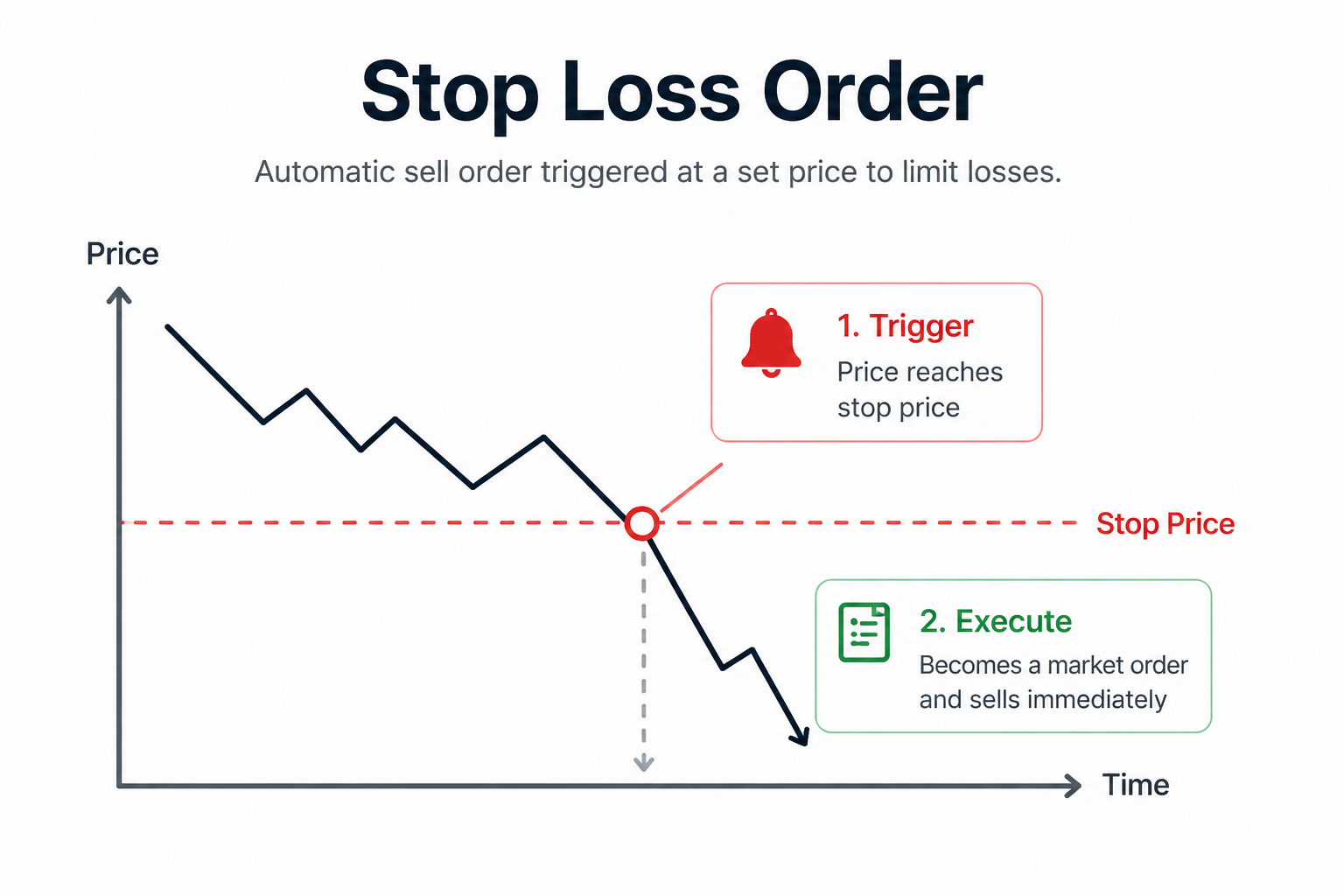
A stop loss order is a conditional order that becomes active when the market price reaches a predefined stop level. Once triggered, it is typically converted into a market order and executed immediately.
Before activation, the order remains inactive and does not appear in the order book. After activation, it participates in the matching process and competes for available liquidity.
Execution Mechanism
The execution of a stop loss order can be described as a two-stage process. Initially, the order remains dormant until the stop price is reached. Once triggered, it is converted into a market order and executed at the best available price.
For example, if an asset is trading at 100 and a trader sets a stop price at 95, the order will be triggered when the price falls to 95. The trade will then execute at the prevailing market price, which may be lower depending on liquidity conditions.
Use Cases
Stop loss orders are primarily used for risk management. In long positions, they help limit losses when prices decline; in short positions, they protect against rising prices. They can also be used in breakout strategies, where orders are triggered when the price moves beyond a key level.
Comparison with Other Order Types
Unlike limit orders, which prioritize price control, stop loss orders prioritize execution certainty. Limit orders may not be filled, whereas stop loss orders aim to ensure execution by converting into market orders.
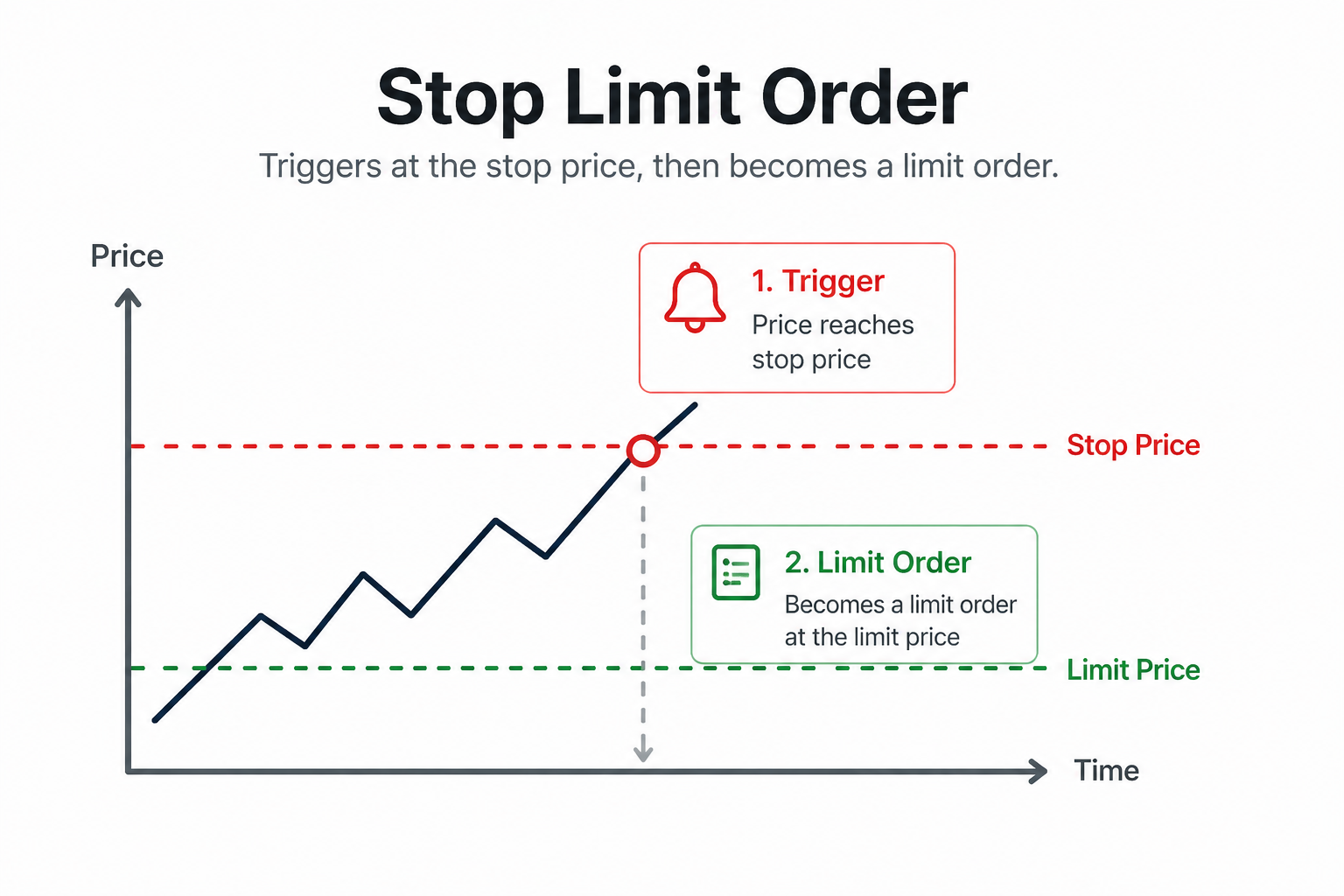
Compared to stop limit orders, stop loss orders do not impose price constraints after activation. This makes them more reliable in terms of execution but exposes traders to potential slippage.
Risks and Limitations
The primary risk of stop loss orders is price uncertainty. In fast-moving or illiquid markets, the execution price may deviate significantly from the stop price, a phenomenon known as slippage.
In extreme market conditions, clusters of stop loss orders may be triggered simultaneously, amplifying price movements and creating cascading effects.
Microstructure Perspective
From a market microstructure perspective, stop loss orders represent latent liquidity, as they are not visible in the order book prior to activation. When triggered, they become market orders and consume available liquidity on the opposite side of the book.
This mechanism can lead to rapid price movements and is a key driver behind phenomena such as breakout rallies and flash crashes.