Order Types
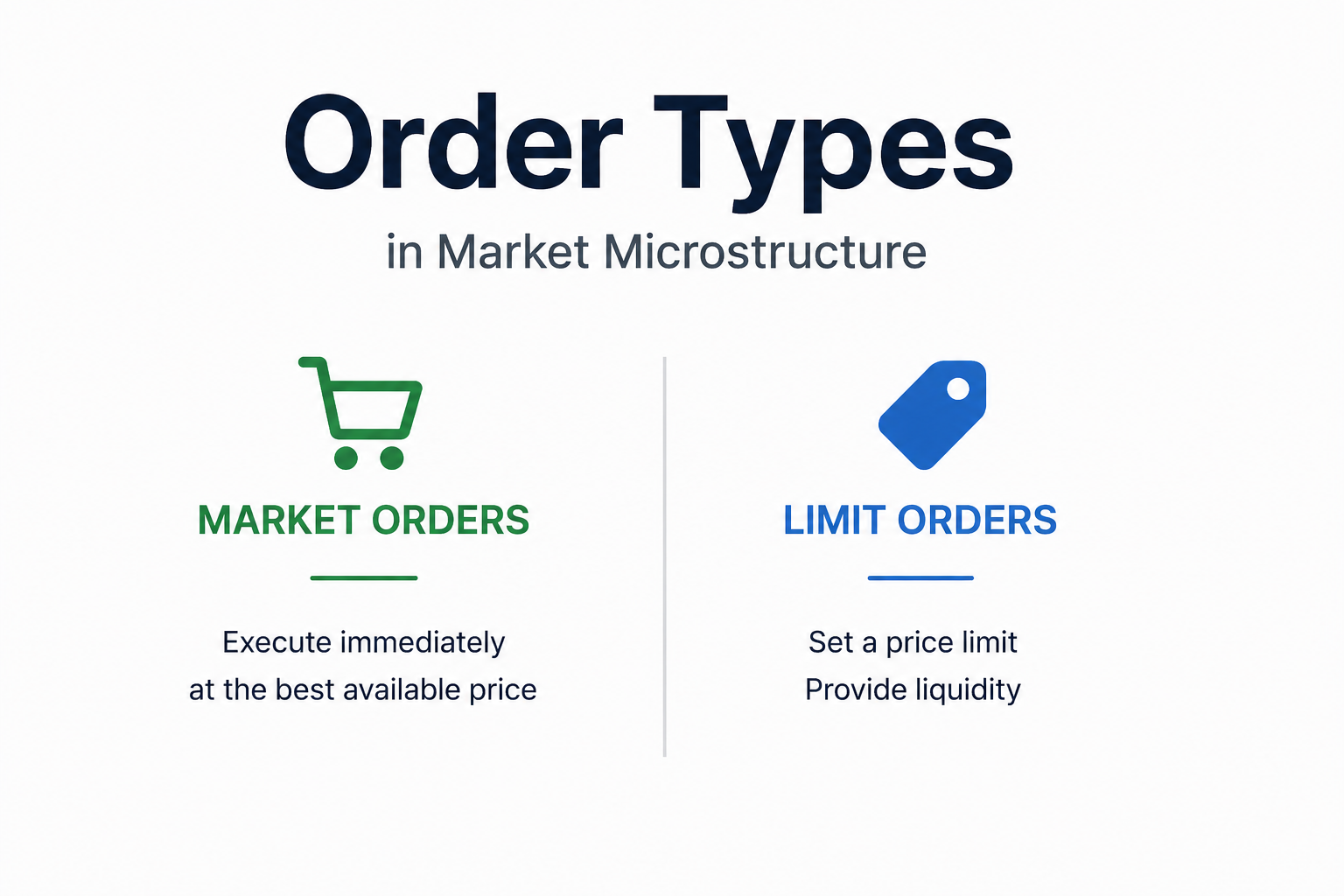
Orders play a fundamental role in market microstructure. An order is simply an instruction to buy or sell a specific quantity of a given asset. In microstructure theory, orders are typically classified based on their impact on liquidity and the risks they entail. The two primary types are market orders and limit orders.
Market Orders
Market orders are instructions to execute a trade immediately at the best available price. Because they demand liquidity from the market, they are associated with execution certainty but price uncertainty. Traders using market orders prioritize speed and immediacy over price control, making them common in fast-moving or time-sensitive trading situations.
Limit Orders
Limit orders, by contrast, include a predefined price constraint: a maximum price for buy orders and a minimum price for sell orders. These orders contribute liquidity to the market by resting on the order book. However, they carry the risk of non-execution if the specified price is not reached.
Market Differences in Order Behavior
The behavior of these order types can vary depending on the market structure. In dealer-driven environments, limit orders may remain hidden until certain market conditions are met, meaning they do not provide visible liquidity. In contrast, in fully order-driven markets, limit orders are typically placed directly onto a central order book and are visible to all participants, assuming sufficient transparency.
Order Conditions and Execution Control
A wide range of conditions can be attached to orders, allowing traders to control when an order becomes active, how long it remains valid, and whether it can be partially filled. Orders may also be directed to specific venues or counterparties, adding another layer of execution control.
Advanced and Hybrid Order Types
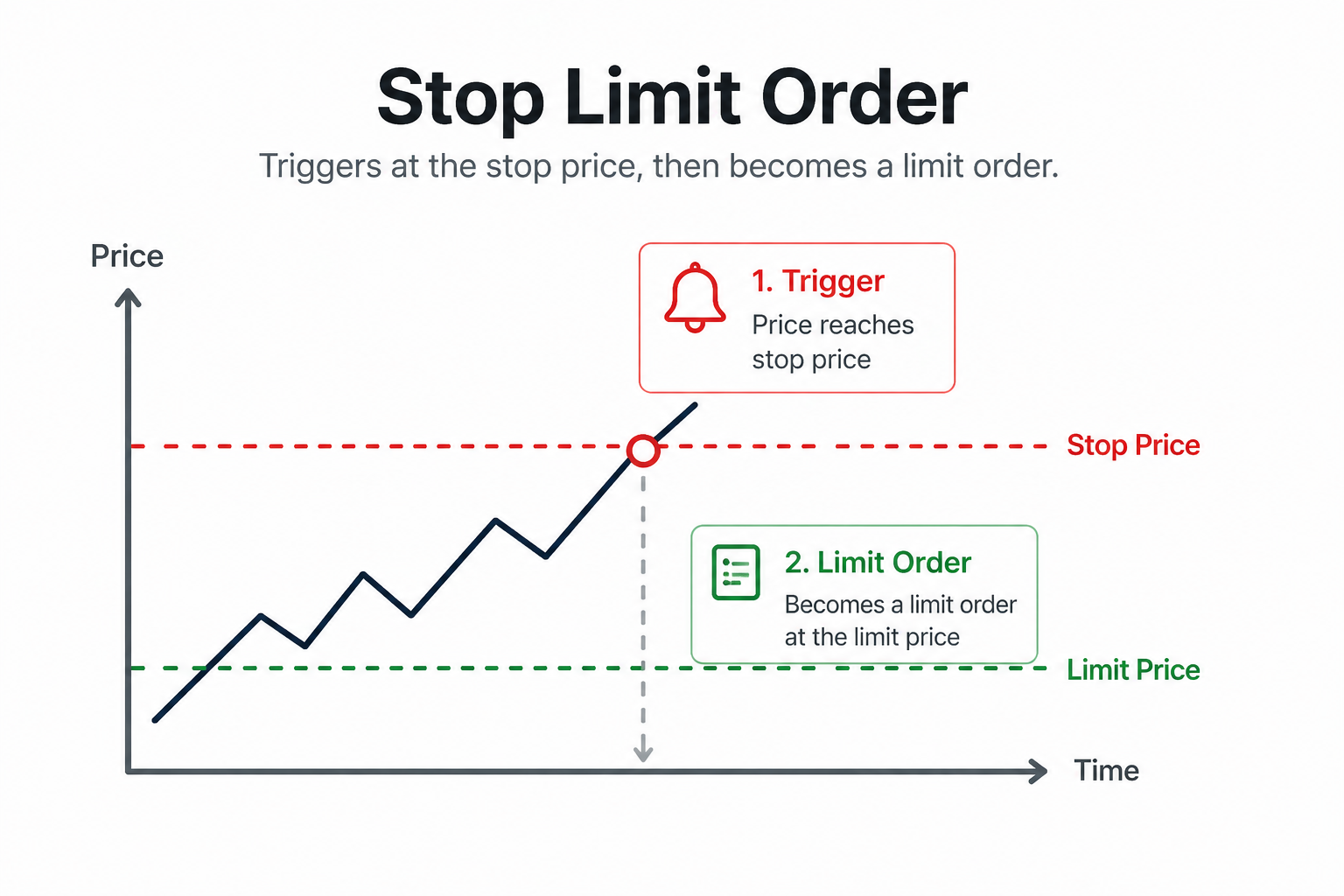
Modern trading systems support a variety of advanced order types by combining different conditions and execution rules. For example, hybrid orders such as market-to-limit orders incorporate features of both market and limit orders. Conditional orders, such as stop orders, become active only when predefined conditions are met—for instance, when the market price crosses a specified threshold.
Hidden orders and iceberg orders have also gained importance, as they allow traders to execute large positions without revealing the full extent of their trading intentions, thereby minimizing market impact.