The Nature of Order Instructions: Beyond Basic Trading
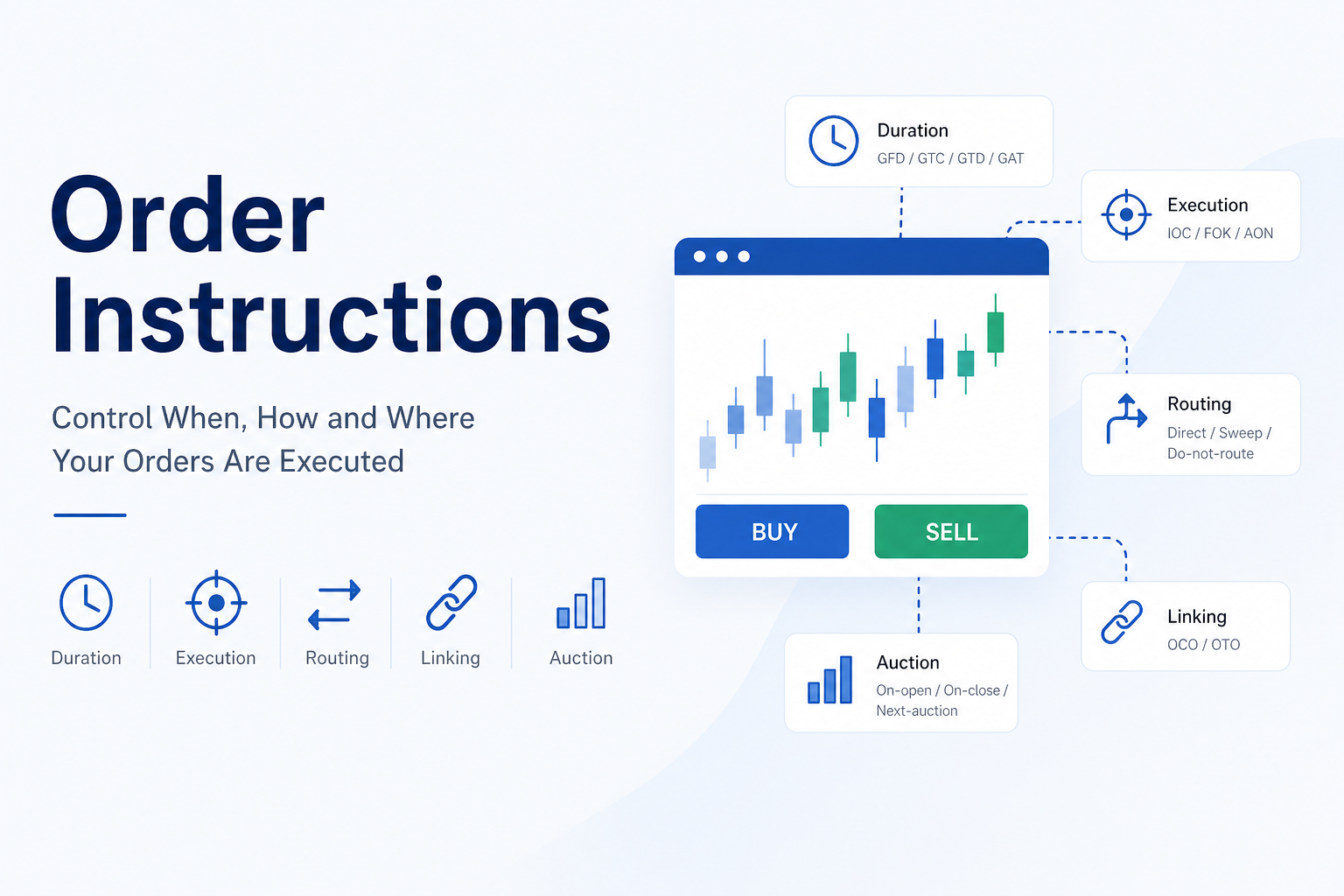
In modern financial markets, an order is no longer just a simple buy or sell request—it is a configurable execution tool. Order instructions are conditions attached to orders that define when they become active, how they are executed, and where they are routed.
These instructions allow traders to move from deciding whether to trade to controlling how to trade , improving execution quality in increasingly complex markets.
Controlling the Order Lifecycle: Duration Instructions
The duration of an order determines how long it remains active in the market. The most common type is the Day Order (GFD) , which expires at the end of the trading session.
More flexible options include:
- GTC (Good Till Cancel) – remains active until manually canceled
- GTD (Good Till Date) – valid until a specified date
- GAT (Good After Time) – becomes active at a specified time
These are particularly useful in algorithmic execution, where timing control is critical to minimizing market impact.
Execution Constraints: Fill Instructions and Liquidity
Fill instructions define how an order interacts with market liquidity:
- IOC (Immediate or Cancel) – execute immediately, cancel the rest
- FOK (Fill or Kill) – must be fully executed immediately or canceled
- AON (All or None) – only execute if the full quantity is available
These options reflect a trade-off between execution certainty and liquidity access. For instance, high-frequency trading strategies often rely on IOC to reduce exposure time
Market Phase Targeting: Auction Instructions
Certain instructions restrict execution to specific market phases:
- On-open
- On-close
- Next-auction
These are widely used in index rebalancing and closing-price strategies, where liquidity and price significance are concentrated.
Routing and Market Fragmentation
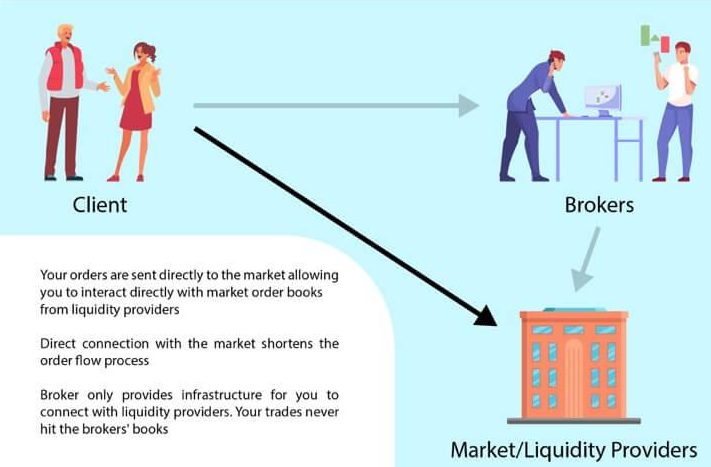
In fragmented markets, orders may be executed across multiple venues. Routing instructions control this behavior:
- Directed routing
- Inter-market sweep orders
- Do-not-route
For institutional traders, routing decisions directly affect execution quality and implicit transaction costs.
Conditional and Linked Orders: Strategy Integration
Advanced trading strategies rely on relationships between orders:
- OCO (One Cancels Other) – execution of one cancels the other
- OTO (One Triggers Other) – execution of one triggers another
These structures are fundamental in automated trading systems, enabling stop-loss/take-profit combinations and breakout strategies.